IVIS RESEARCH / DESIGN PROJECT
ROLE:
UX Researcher / UX Designer
caSE stUDY:
Situation: Young drivers aged 18–24 are involved in a disproportionate number of fatal road accidents in the UK — 73 killed in 2024 alone, with distraction a recurring factor. Modern in-vehicle infotainment systems (IVIS), including touchscreens, complex menu structures, and smartphone mirroring platforms like Apple CarPlay and Android Auto, were suspected of contributing to this by increasing visual and cognitive demand while driving. However, existing research rarely isolated which specific design features were responsible.
Task: The project set out to determine whether and how infotainment system design increases distraction among young drivers, focusing on three areas: whether physical and voice controls reduce off-road glance time, whether smartphone mirroring increases the frequency of phone-like interactions, and whether menu depth and breadth affect task efficiency and error rates. These insights would then feed directly into the design of a safer prototype.
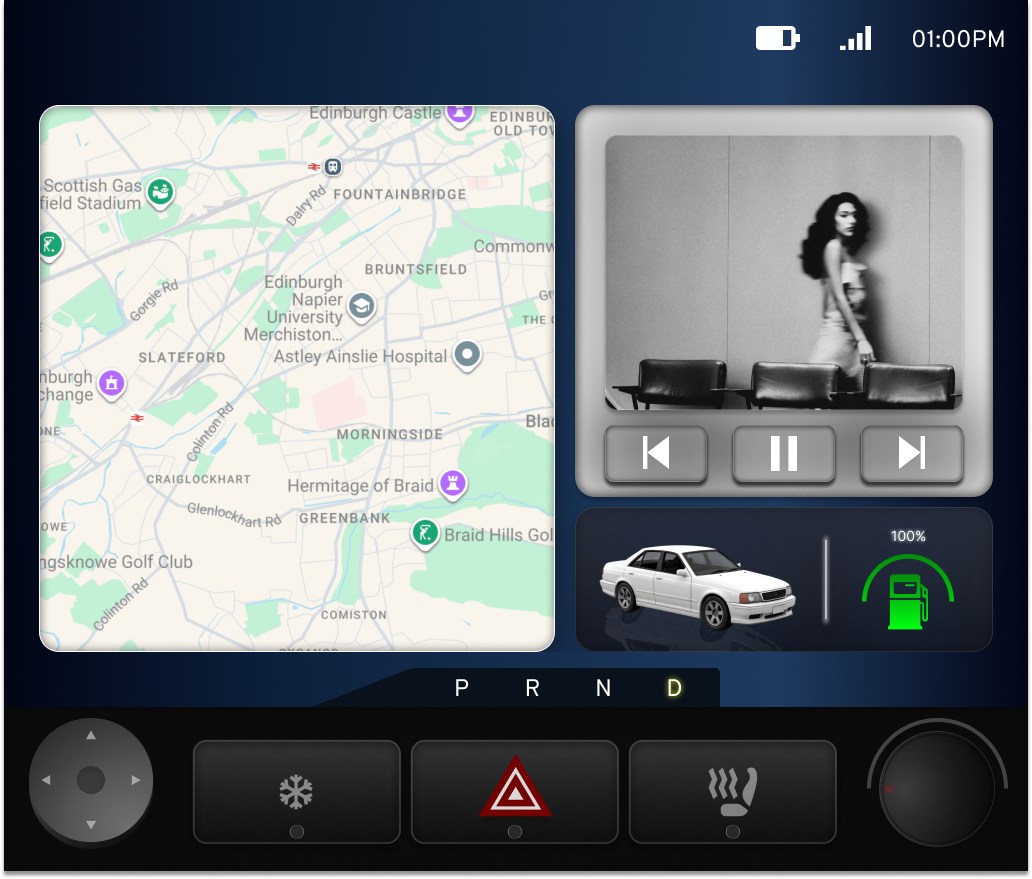
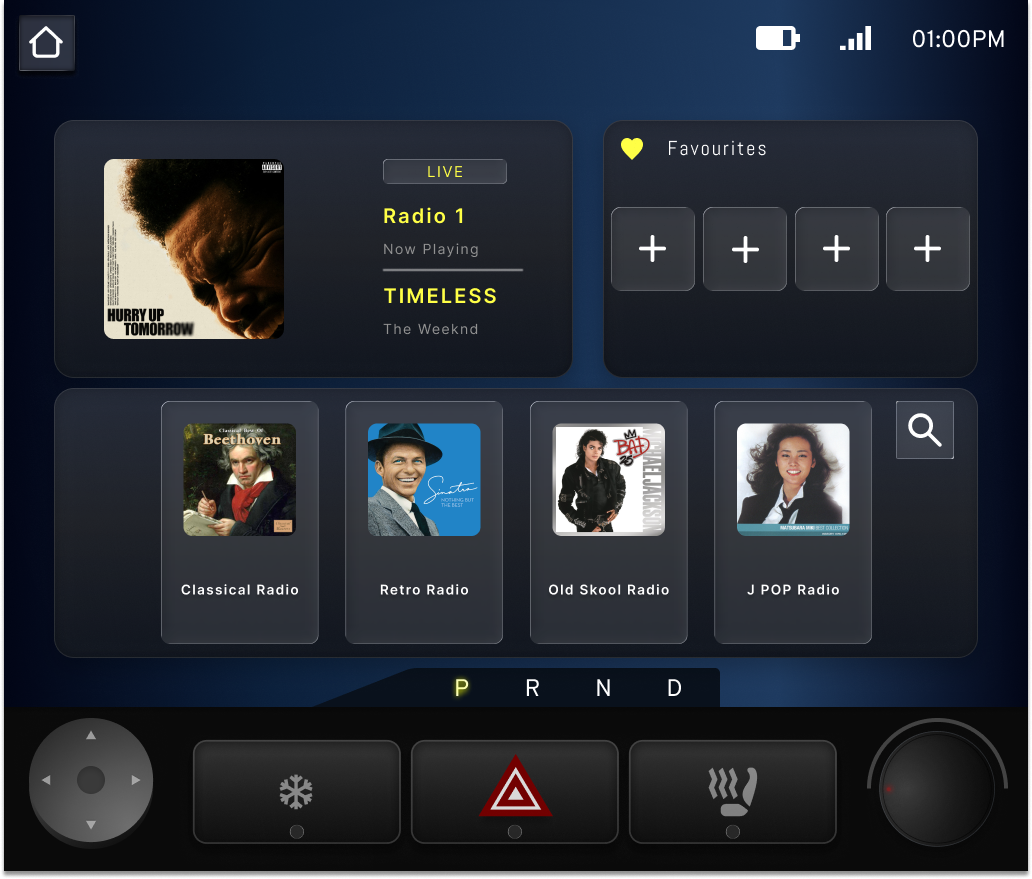
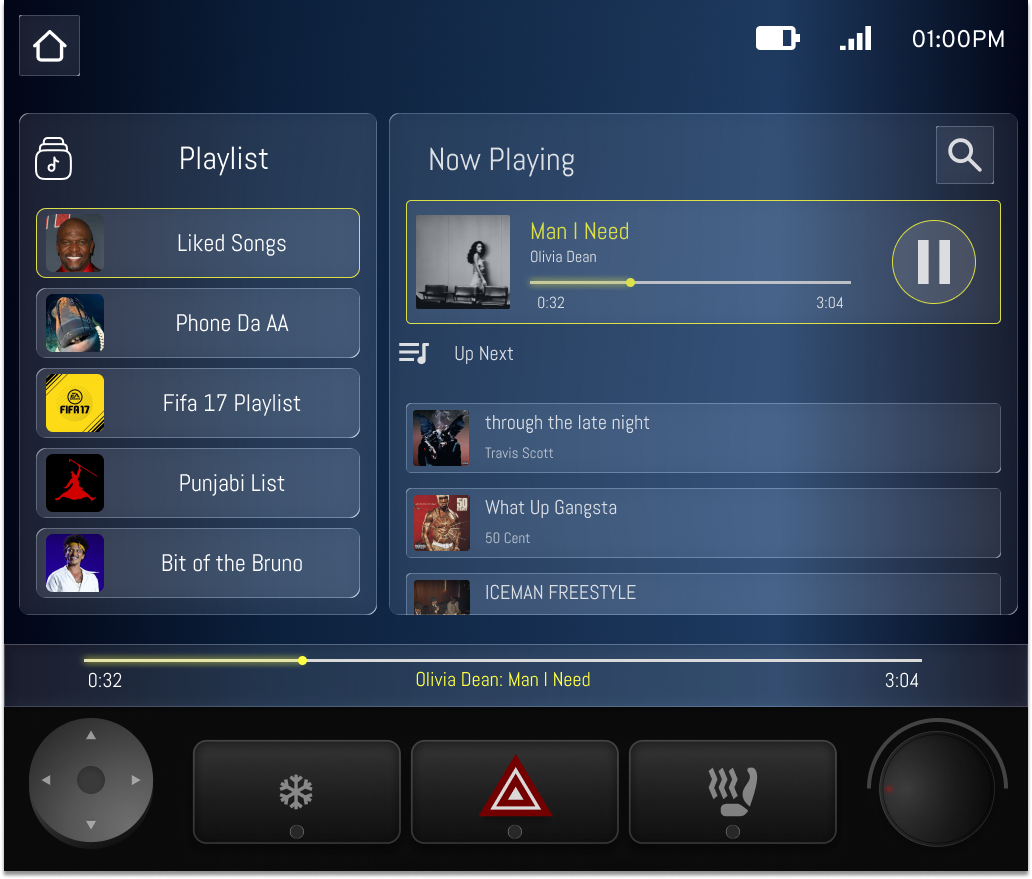
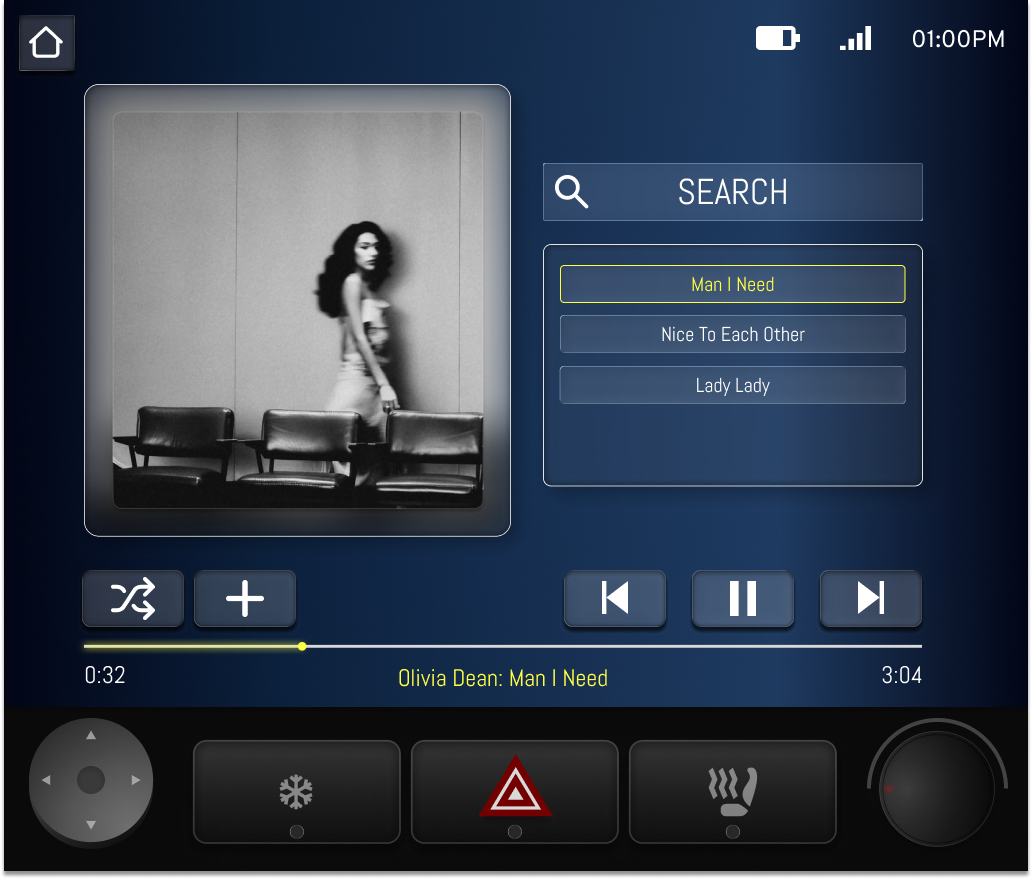
Action: A mixed-methods, user-centred research approach was used to triangulate findings across three sources: a questionnaire completed by 50 young drivers covering layout preferences, input methods, and perceived distraction; 10 semi-structured interviews with young drivers to gather deeper, personal insight; and interviews with police officers to add a professional, road-safety perspective. Ethics procedures were followed throughout, including informed consent and secure data handling in line with university guidelines. The findings were then translated into a working prototype using the Double Diamond design process — moving from discovery and problem definition through to low-fidelity wireframes and a high-fidelity build — with MoSCoW prioritisation used to decide which features were essential versus which added unnecessary distraction (e.g. smartphone mirroring was deprioritised as a "won't have").
Result: The research showed touchscreens were the strongest contributor to visual distraction, while physical and voice controls were seen as safer since they don't require visual confirmation. A key contradiction emerged: young drivers understood the risks but continued frequent use anyway, and smartphone mirroring didn't reduce distraction — it just changed its shape, encouraging quicker but far more frequent interactions due to familiarity.
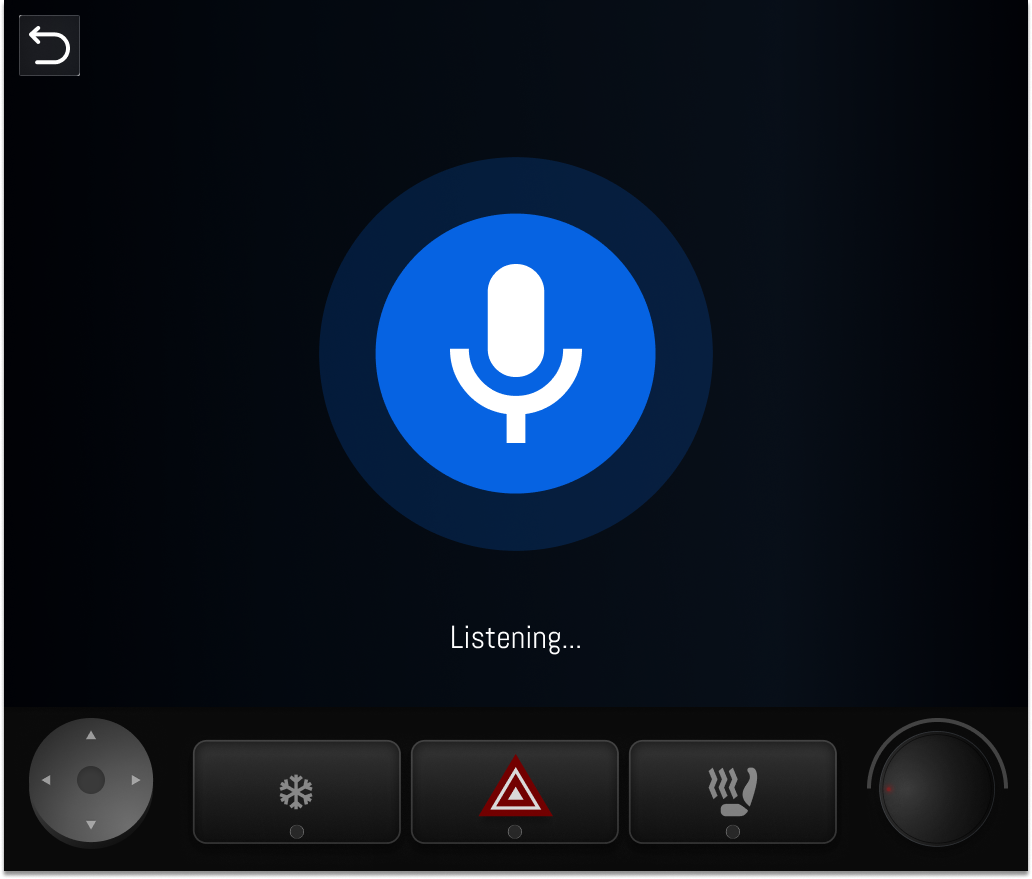
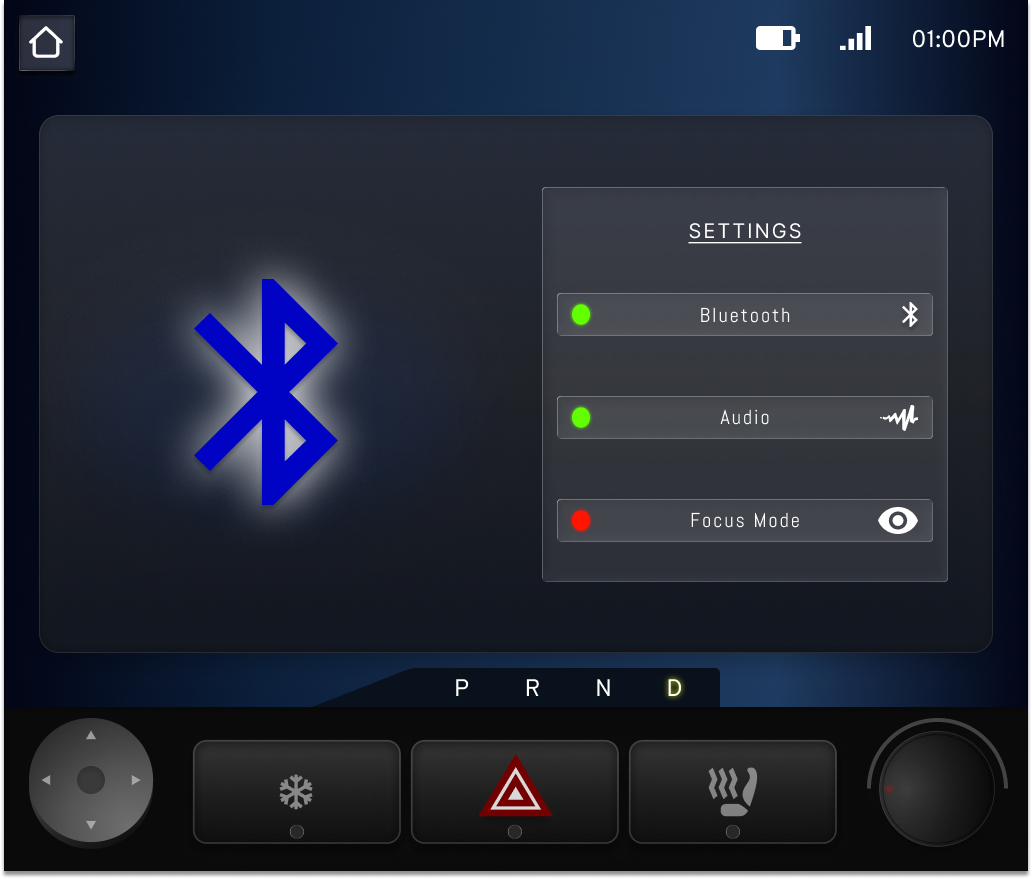
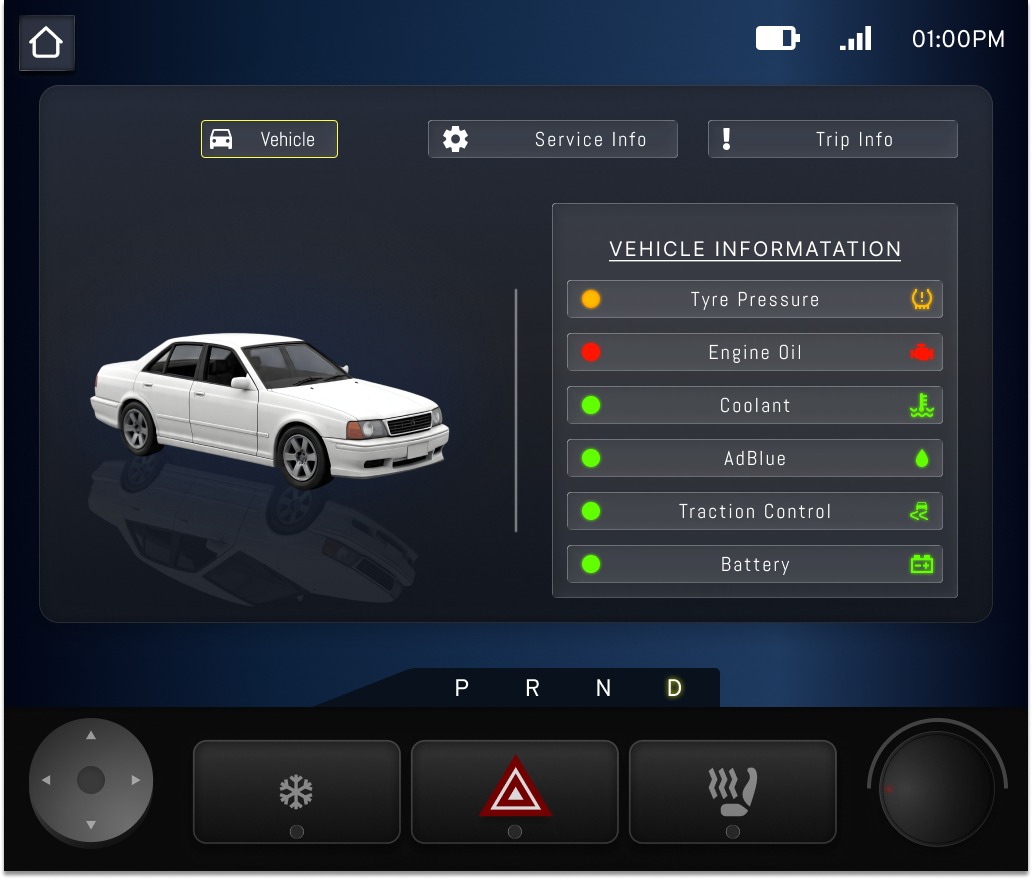
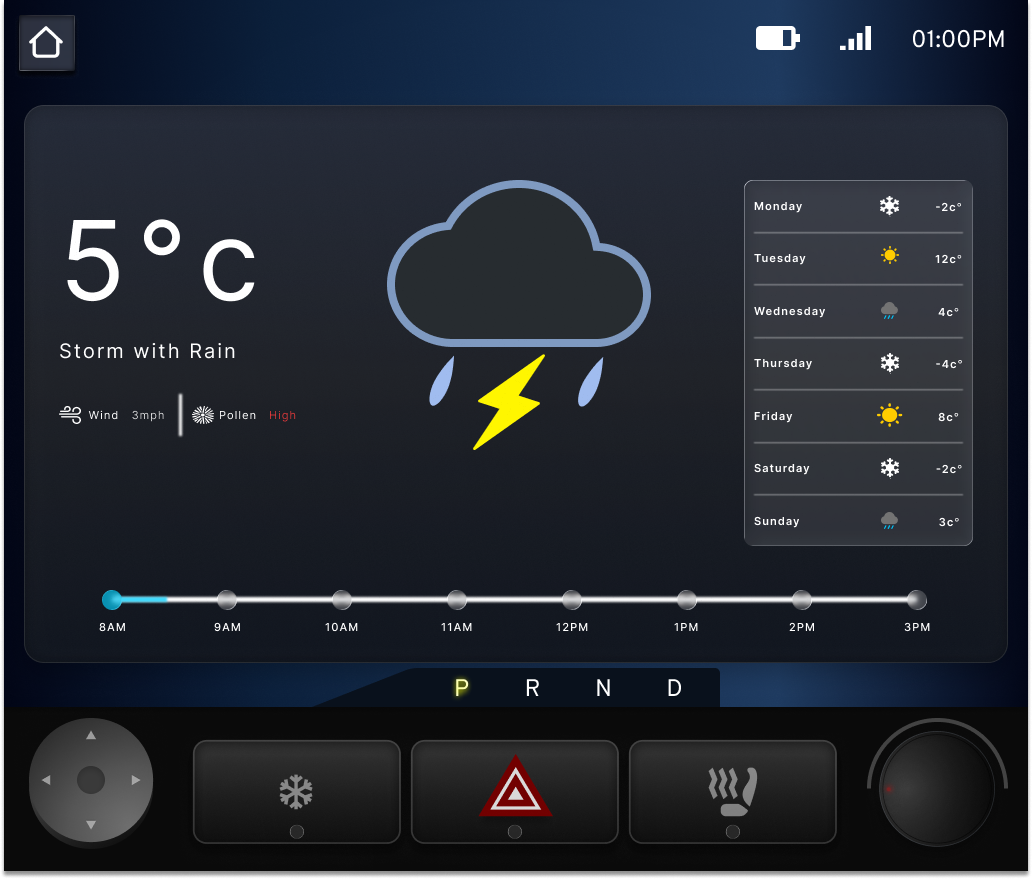
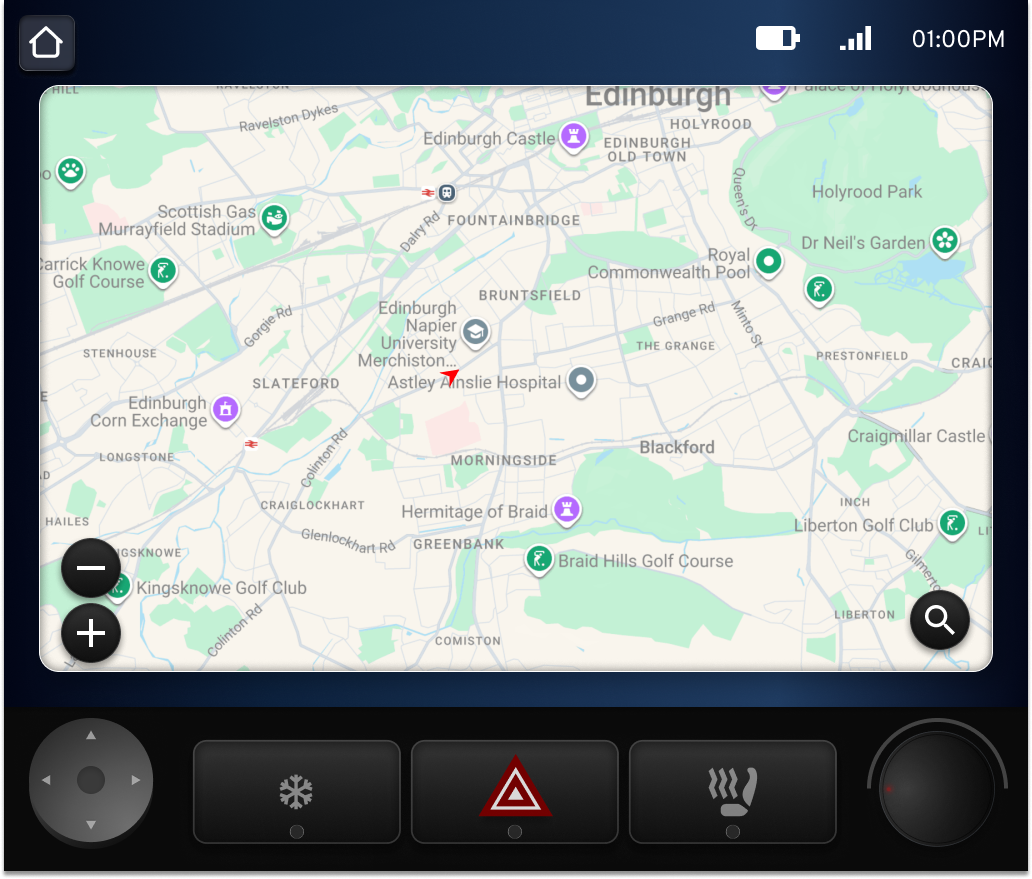
Finalised Prototype
Prototype Images